By Tim Waters · Updated
By Tim Waters · Updated
As an Amazon Associate, Bunnyproof earns from qualifying purchases.
 Ever thought about using clear acrylic sheeting in your bunny enclosure?
If you are thinking of using clear acrylic sheeting such as Perspex or Plexiglass in your bunny enclosure or to do some bunny proofing then here is some tips on how to do this safely as well as some ideas of how other bunny owners have put it to good use.
The advantages of using acrylic can give you a large solid barrier which can be used to contain the spread of mess but still allow you to see what your rabbits doing. Acrylic is also wipe clean and will avoid damage from toilet mess which would cause wood to warp or decay. It will also be a lot more resistant to chewing and scratching then wood which can be on the menu for a bored and hungry bunny.
One of the main drawbacks of using acrylic is that it is a brittle material and when put under stress will often shatter. This makes it a hard material to work with as it will often break when cut or if screwed down too tightly. This can also make it unsuitable if not used correctly in an enclosure, especially if it covers a large area, is fitted poorly and is not strong enough. It can be dangerous if it does smash for some reason as it will break into sharp shards which could easily cause harm. If you are thinking of using it always make sure its strong enough and fitted securely.
Another drawback Is it can quickly become scratched and damaged making it less appealing and if it's in an area where your rabbit spends time eating or is near where it goes to the toilet these scuffed areas would become hard to clean.
Another thing to consider is that although rabbits don't vocalize any noise they do enjoy smashing around and will quickly learn to use the surface to scratch and drum on which can become an annoyance.
Lastly be mindful that rabbits are a prey animal and often prefer a bit of cover when they relay. Always make sure they still have a shady area where they can feel less exposed to have a snooze in. If you create an environment with clear sides you may take away this scene of shelter.
One clever way this material can be put to use is when its mounted directly onto a wall to protect it. If for instance you have built a large pen that uses a wall as a part of its perimeter then fitting a sheet of clear material will stop any damage to the wallpaper or wall and be nicer looking, then if you were to cover it with another material such as wood. It can be flexible enough go all the way to the floor to cover over the base boards.
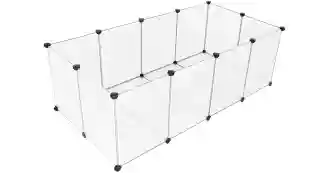
If your bunnies free roam for part of the day, a pen gives them a safe base for the rest of the time and keeps the mess in one place. A member of our Facebook group recently asked the group for recommendations for exactly this: clear panels taller than 24 inches, with a gate they could walk through.
Tall enough that your bunny can't jump or climb out. Bunnies are good climbers and jumpers, so if yours likes to leap, go for taller panels. Keep boxes, hideouts and furniture away from the sides too, or your bunny will use them as a step to get over.
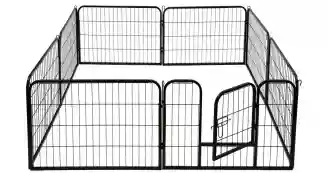
A door you can step through makes daily jobs much easier, like changing the litter box and topping up hay, and you won't have to lift your bunny in and out. Check that it latches firmly, because bunnies soon learn to nudge a loose door open.
Acrylic is brittle and scratches easily, as we cover above, so choose a pen with a sturdy frame that holds the panels firmly at the base.
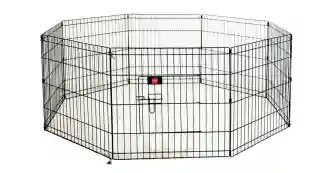
If you'd rather not use acrylic, a dog x-pen is usually a cheaper way to make a large pen, and it can go all the way around a sheet of plywood used as a washable floor. Compare the most popular rabbit pens and enclosures in our review.
Tim founded Bunnyproof and has kept house rabbits for over 20 years. He runs the Bunny proofing Facebook group, where around 50,000 members share what works in their homes.
Our guides share practical experience from rabbit owners. They are not a substitute for veterinary advice.
More about Bunnyproof